3D Game Development Part 2
Last year, I started working on some 3D games. How are they coming along?
3D Game Development
I've wanted to make video games since I was little. In the last few years, I have made a couple of games. (a top-down shooter and a sidescrolling platformer) I started making a couple of 3D games last year (blog post). It's been six months, so I thought I'd write an update.
Game About Liminal Spaces
Last devlog, I was working on making a '90s style game that reflected my stress dreams. I wanted to do that by making a game about liminal spaces. Liminal spaces are those uncanny, transitional spots that feel 'off' because they are meant to be passed through, not stayed in. These could include a motel late at night or a deserted hallway. They are often characterized by a feeling of loneliness or transition.
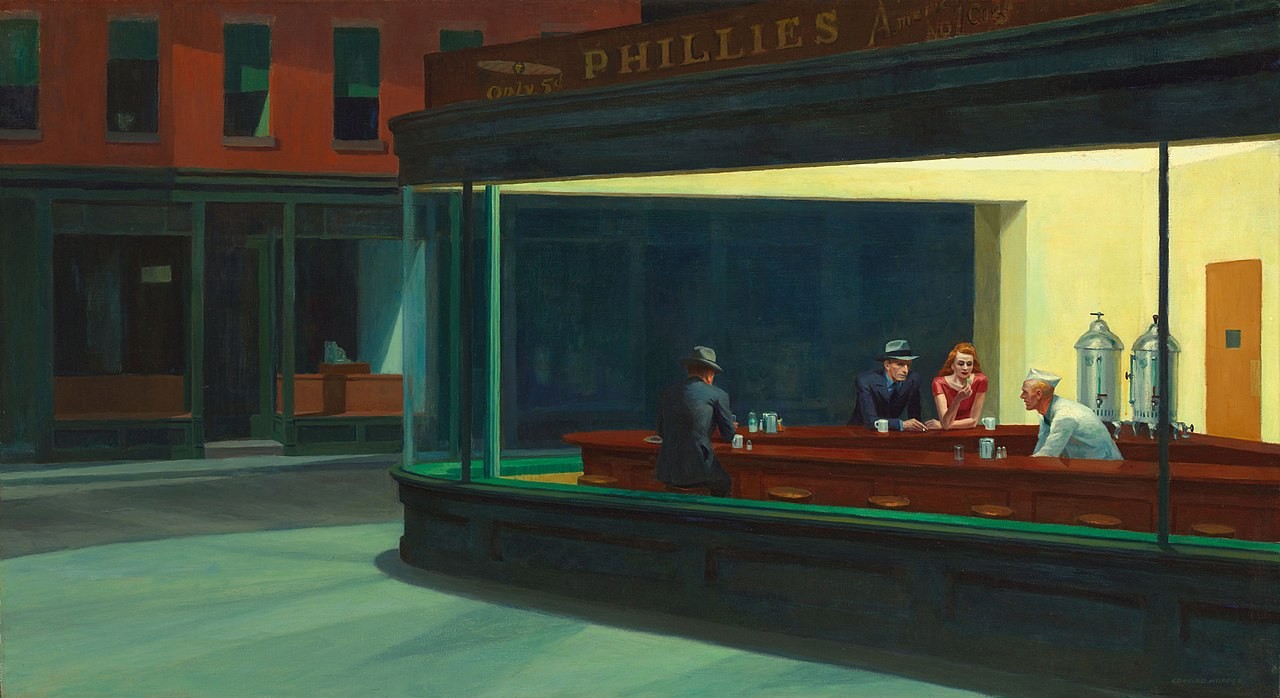
Liminal spaces are one of my favorite aesthetics, probably because they manifest so often in my dreams. I love the feeling in my chest as I walk through an airport terminal that's strangely devoid of people in the early morning. Walking through a city at night, or an empty mall, fills me with a feeling that's difficult to describe.
I was working on my '90s style game, and the scope of the project was too big. I'd need to build out many city blocks, building interiors, and I eventually realized that bringing that dream to reality would take me years. While I still want to make that game, I decided to put it on the shelf and de-scope the project I was working on. An amazing, unpublished, unfinished game is way worse than a pretty good game that people can play.
I'm reminded of the film The Thief and the Cobbler, by legendary animator Richard Williams. Williams worked on the movie for over 30 years, intending it to be one of the best ever pieces of animation. He was unable to finish the film, and the studio smashed the unfinished bits together and released it anyways. It debuted to poor reviews.
This is a cautionary tale. Making art that's good enough is sometimes better than overscoping and never finishing. I wanted to take the lesson from that film and properly scope this game. As the saying goes, a bird in the hand is worth two in the bush.
The Backrooms
As I was thinking about liminal spaces that would be easier to scope, I thought of the backrooms. The backrooms are a piece of internet culture dating back to this photo from 2019.
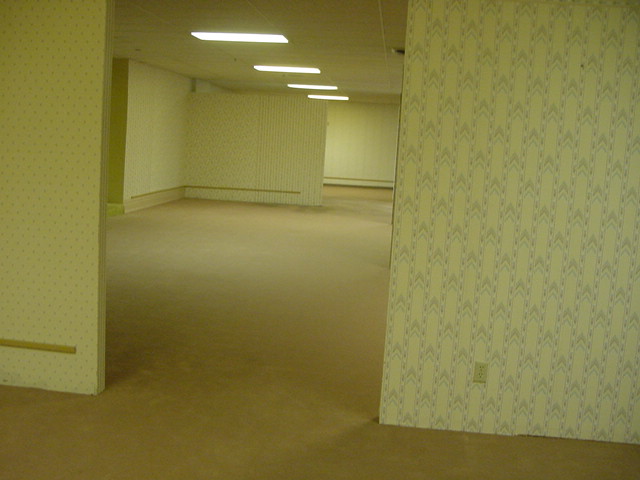
The idea of the backrooms is a place outside of normal reality where you get lost or trapped. They're a supernaturally large space, and they've captured the internet's collective imagination. This one picture of a hobby store has inspired countless youtube videos, video games, and an upcoming A24 film. The creators of the Apple TV series, Severance, cite the backrooms as an inspiration. The backrooms themselves were inspired by the aesthetic of films like Stanley Kubrick's The Shining.
All of us have had some experience of walking through a space like that. Lost in a church, stuck in the back of a mall when you went through the wrong door by accident, walking through a hotel conference room as a shortcut. This universality makes the backrooms very compelling.
Also, backrooms media is relatively easy to make. The geometry of the backrooms is fairly simple. It's uncanny and irregular, but mostly just sharp edges and basic room parts. The materials are simple -- yellow wallpaper, a few outlets and doors. All of this means it's not too hard to create a backrooms scene in 3d software.
I decided it would make sense to adapt the basics from my liminal space game into a backrooms game. This was at a bit of a bad time, because shortly after this, the trailer for the Backrooms feature film came out. Now, I'm sure there will be a resurgence of backrooms games, and people will assume I'm jumping on the bandwagon.
Backrooms Games
Backrooms games generally fall under the umbrella of 'walking simulators'. Walking simulators are almost not games, per se, but closer to a virtual museum. Some backrooms games have puzzle elements, but most of them are closer to eerie mazes, and that's what I decided to shoot for. There are also backrooms games where the player is being chased through the backrooms by an evil entity, but for me that pushes the game away from being creepy into cheap thrills (not my goal at all).
The Vibe
After the 2019 picture, the next foundational piece of backrooms media was a found-footage-style youtube video. This further defined the genre. For my game, I wanted to lean into a late '90s camcorder vibe. This worked really well with the existing late '90s vibe of my game. I already had the aspect ratio stuck at 4:3, and the resolution downscaled to 640x480, which perfectly matches the camcorders from when I was little.
I was drawn to a late '90s or early 2000s vibe for the liminal city game, and the backrooms game has a very different aesthetic, but the exact same time period. This is when I was a kid, and there's some powerful nostalgia for me in media from that era.
Because the gameplay is so simple, I really wanted to nail aspects like the level design and visual feel of the game. First off, I really tried to maximize the camcorder feel. As reference, I dug up some '90s camcorder videos from my childhood. Notice how the old camera sensors wash everything out and cover everything with a yellow sheen.

Obviously, these are fun, lighthearted videos of a baby. They aren't trying to create a creepy or liminal vibe. In spite of that, I can still use them to think about how old cameras handle light or tint the environment.
I added a bunch of post-processing effects to make my environment feel more like an old camera. Mild chromatic aberration, lens distortion, color bleeding, edge sharpening, bloom, motion blur, lower contrast, film grain - All of these make my game feel a little more like it's being seen through an old camcorder. I kept all of the effects mild so they don't overwhelm the player, but they add some depth to the game for sure.
On top of that, I found a couple of VHS shaders other people had built, and applied both of them to my project. one of them was six years old, so I had to re-write all the code, but it was super helpful. It added things like wobbling lines and static, which I kept minimal so as to not be too distracting. Finally, I wanted to build a minimal UI. Just enough to make it feel like a camera, but not too crazy. I found a public domain Ray Larabie font that worked, and tweaked it a bit. I blurred/softened the edges of the 'REC' in the top corner and popped a bit of black outline around it to really integrate it like an old camcorder did. I also added a little crosshair to the center of the screen. Some old camcorders had these, but the real purpose was that a little dot in the center of the screen helps players not get motion sickness. I took great care to be subtle and not overdo the effects.
I also capped the frame rate of the game to 30 FPS. This is what old camcorders were capped at, and creates the blurring and smearing you see on older footage.
Building the Game
To actually go about building the game, I first had to gather the materials. What's nice is that most of the architecture of a backrooms game is made of simple shapes. The most important part is making sure you have good textures.
There are nice, free textures available under creative commons licenses all over the internet. I was able to find textures for the walls, floors, and ceilings for free!
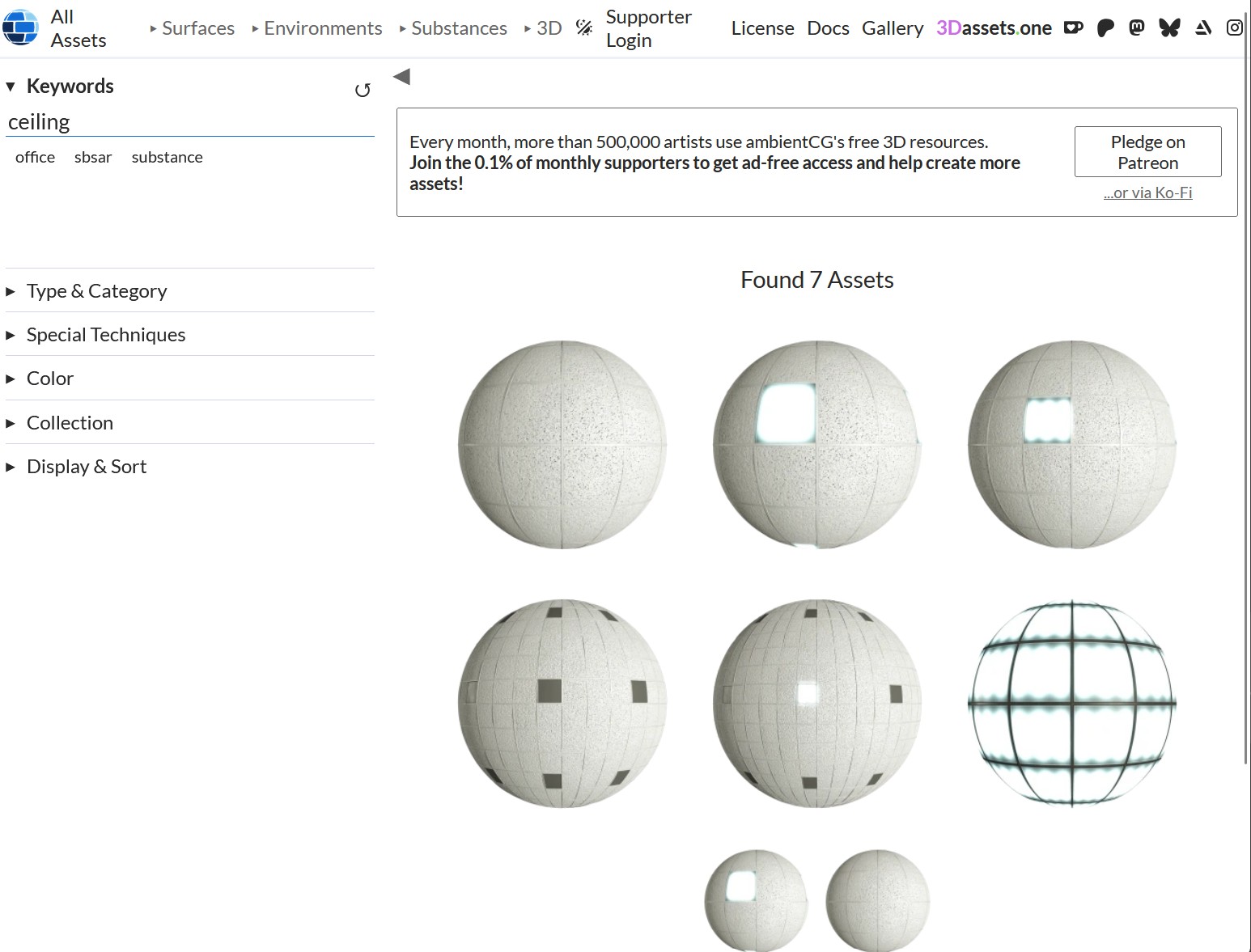
I decided to build as much of the game as possible in ProBuilder, Unity's built-in prototyping software that lets you create simple 3D models right in the editor. This makes things a lot faster than building things in external software like Blender, and importing each finished object.
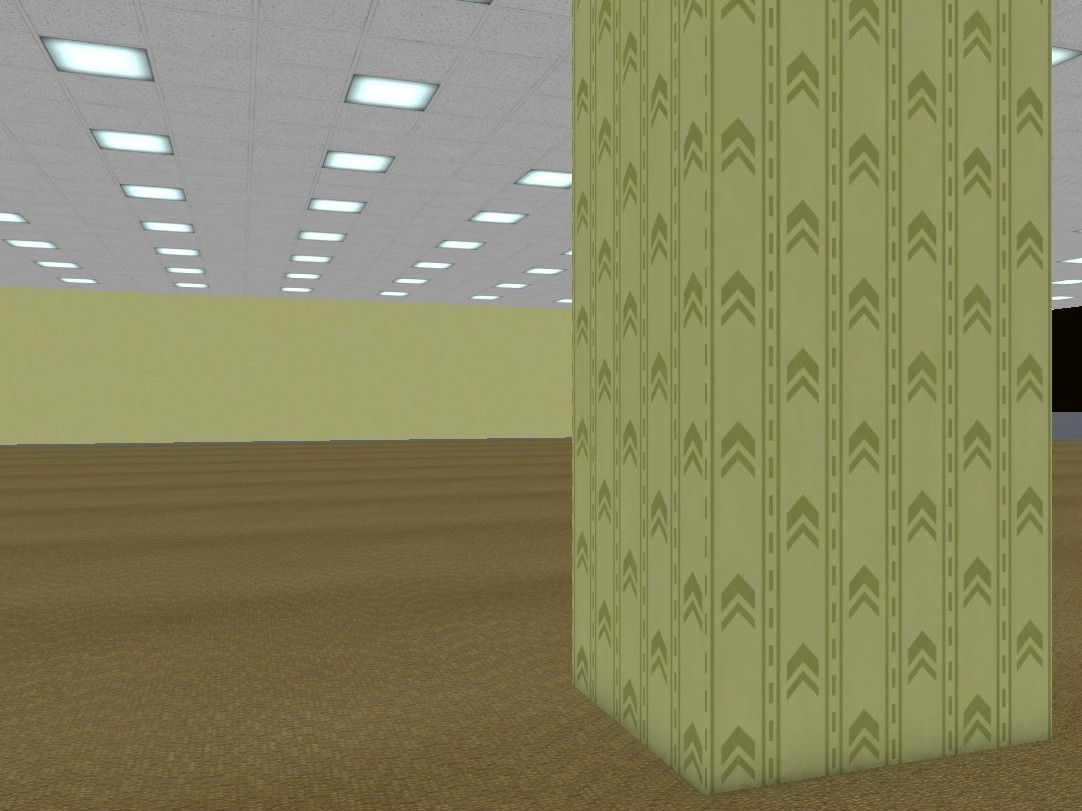
So far, I haven't built much, just a couple of rooms for testing. I've also worked a bunch on realistic lighting, but I'm not going to go into that in this post since I have a lot more to learn.
Movement
The next thing I spent a while on was movement. I already had a (mostly) working controller from the previous liminal space game that let the player walk, run, jump, and crouch. However, when the player was controlling the character, it really felt like playing an older FPS video game. I really wanted to feel more like lugging a physical camera around a physical space.
The first thing I did was implement a light camera bob and sway when the player walks/runs. Then, I added some camera tilt when the player looks around. While these are hardly noticeable (I bet most of you won't notice them, even now that you've read about them), they do help make the game feel more real, at least subconsciously. I also have a bit of perlin noise on the camera that simulates subtle movement due to breathing.
One other thing I decided was that I wanted to implement a stamina system for running. Lots of games have these - you can't just hold the sprint button and run forever. I especially wanted to implement this since the point of the game is to explore a creepy space, not sprint to the finish line. I added a minor FOV (Field of View) punch when you start sprinting, as a visual indication of the increased pace.
But how was I going to let the player know what was going on with stamina? I wanted to keep the same rule from the last version of the liminal space game - I wanted sounds and UI to be diegetic (all in-world). That means I wasn't going to put a stamina bar on the screen.
Audio
The solution I came up with was to use audio. I decided to use breathing to let the player know when they were starting to run out of stamina. Then, when they were close to running out, the breathing would kick up a notch. I've seen a similar system in other games, and at least for me, it's very effective in disincentivizing me to run all the time. Something about the breaths just elevates my cortisol. I ended up recording a bunch of breathing sounds on my mic. When the player starts breathing hard, the game plays different breath clips at random, which stops the game from having a repetitive breath sound, which could break immersion.
I also reworked my footstep audio. In addition, I added faint camera noise so it sounds like you're watching an old tape as you play. Eventually, I plan to add some nice fluorescent light hum (mentioned in the original backrooms 4chan post). This will be spatial noise (when you get closer to the sources of sound, they get louder like in real life.) Minor ambient noise is important in this game, so I'll be thinking about how to use it effectively as I build levels.
How Does it Look?
The result of all of this work is a basic prototype that I think really captures the '90s camcorder/found footage vibe the game's supposed to embody. Here's what it's like now:
Conclusion
This is really promising. It was a lot of work to get the game looking like this, but it's close to the source material. The game feels like a fusion of the backrooms picture above and my childhood videos, which is what I was aiming for.
I think that scoping this game into a short backrooms exploration is the right call. I'm at a point where I can start building out the levels soon, and I hope to release the game later this year. Be on the lookout for it!